
An evolutionary opening
Wuling’s trajectory reads like a slow, deliberate craft—starting from compact city carriers to nimble electric microcars—and that arc matters when you design parts for performance-centric builds. As one of the notable commercial vehicle manufacturers in China, their shift toward modular platform thinking provides lessons for engineers and designers aiming at high-performance outcomes. The evolution story frames a practical question: what does a parts designer borrow from a mass-market platform that will actually improve torque delivery, thermal resilience, or NVH control in a high-spec variant?
Roots: simplicity, cost discipline, and platform lessons
Wuling’s early success rested on efficient body-in-white designs, tight packaging, and repeatable platform modules that cut cost without sacrificing robustness. For parts designers, that origin teaches two things: tolerances and interfaces matter early, and tooling constraints shape what you can later upgrade. A well-documented neck of compatibility between closure, suspension pick points, and powertrain mountings makes a later high-performance swap far less risky. In practical terms, the platform’s footprint and mounting bosses decide whether you can add a stiffer subframe or a bespoke powertrain without massive rework.
Transition to electrification and modular platforms
When Wuling embraced small EVs and modular architectures, the firm learned to standardize electrical distribution harnesses, battery pack interfaces, and ECU communication while still supporting disparate vehicle bodies. That standardization is gold for high-performance parts design: a repeatable battery pack interface or a consistent motor mounting node lets third-party developers and auto part manufacturers design performance modules—be they upgraded inverters, torque-vectoring differentials, or active cooling solutions—knowing fitment risk is reduced. The platform becomes a canvas, but the canvas must have honest anchor points.
Design implications for high-performance components
From a parts-designer’s point of view, three architecture-driven levers matter most: structural load paths, thermal management channels, and electronic control interfaces. Reinforcing structural load paths (for example, by adding a performance subframe) requires knowledge of original crash deceleration paths and weld schedules. Thermal management upgrades hinge on available coolant loop routing and available space near battery and inverter modules. And upgrading software or integrating an aftermarket ECU depends on bus access and defined CAN/ethernet topologies. These are not abstract—each is an engineering constraint that shapes material choice, fastener specification, and serviceability.
Manufacturing and assembly realities
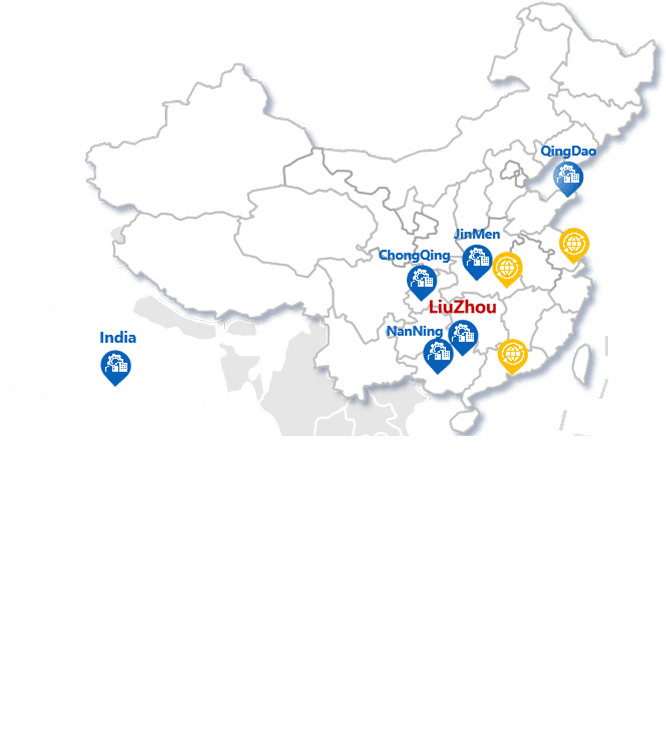
Wuling’s manufacturing footprint—factories concentrated in places like Liuzhou, Guangxi—illustrates how tight integration between design and assembly can lower variability. Real-world anchor: the popularity of compact Wuling EVs in urban China pressured factories to streamline assembly, which in turn encouraged parts to be designed for repeatable, fixture-based installation rather than artisan fitting. For designers, that means prioritizing stamped brackets, alignment dowels, and standardized torque specs so that a high-performance intercooler or strengthened control arm installs cleanly on an automated line.
Performance trade-offs and comparative approaches
Not every upgrade is sensible. You may gain cornering grip by adding a stiffer anti-roll bar—but you may amplify NVH if the mount points were never intended for higher loads. Similarly, larger motors improve acceleration but demand revised thermal management and higher-voltage harnesses. Here a comparative glance helps: choosing between fabricating bespoke mounts, adapting existing subframes, or redesigning the entire platform each carries different lead times, cost, and certification burdens. The right choice depends on the vehicle’s mission: track-focused tune or spirited urban EV?
Common mistakes and practical mitigations
Designers repeatedly fall into a few traps: assuming platform interchangeability, underestimating cooling needs, or skipping early integration tests. A simple mitigation is to mandate early bench and in-vehicle prototypes: bench-test an inverter with the intended motor and thermal loop; then validate fit in a donor vehicle. Also, document acceptance criteria for fatigue life and fastener preload—these are the quiet things that bite you in the field. —
Concrete guidelines for parts designers
Below are pragmatic checkpoints to guide decisions when working against an evolving platform like Wuling’s modular architecture:
- Interface first: map mounting bosses, wiring harness connectors, and cooling ports before designing a part.
- Thermal reserve: design for sustained load, not just peak figures—battery and inverter temperatures rise under repeat stress.
- Serviceability: ensure aftermarket performance parts do not complicate routine maintenance or crash repair procedures.
Advisory close: three golden metrics to evaluate a parts strategy
1) Fitment risk (percent of modifications requiring structural rework): keep under 10% to be production-friendly. 2) Thermal headroom (degrees Celsius under sustained load): aim for at least a 15°C margin over expected peak to avoid derating. 3) Integration delta time (hours to prototype integration and test): shorter cycles indicate better architecture compatibility and lower program risk.
Wuling Motors shows that a mass-market maker can yield architecture lessons valuable to high-performance design—if you respect mounting interfaces, thermal plumbing, and electronics topology. Final thought—learn the platform’s language, and your parts will speak it fluently.