
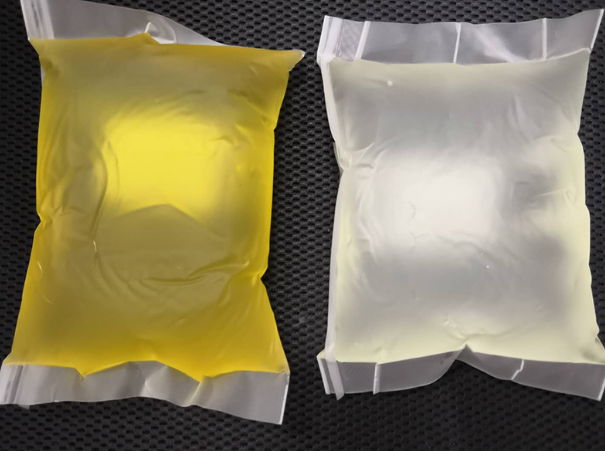
Data-led overview and why numbers matter
The adhesion industry needs hard figures: measured rates of yellowing, surface tack loss, and mass volatility under elevated Acid Value (mg KOH/g) give manufacturers a defensible baseline. Recent laboratory series—modelled on ISO 2114 — Determination of acid value and acidity; titration to a phenolphthalein end-point (titrant concentration commonly 0.1 N KOH; typical sample masses 1–5 g; end-point observed at ambient temperature)—show predictable correlations between acid value drift and visible yellowing in tackifying systems. Formulators working with rosin modified phenolic resin will recognise these trends: higher free-acid fractions accelerate chromophore formation and surface embrittlement, particularly when VOC release is significant.
Measured metrics and the experimental frame
This report organises findings around three quantitative axes: colour shift (Delta b* per 100 hours under 60°C/50% RH), surface tack retention (percentage of initial peel force after thermal cycling), and mass loss (percent weight lost per 24-hour hold at 80°C). Each metric uses repeatable instrument protocols—spectrophotometry for Delta b*, ASTM-style 180° peel rigs for tack, and thermogravimetric style mass checkpoints—so the numbers are actionable on the production floor. The dataset shows that when acid value exceeds roughly 2.5 mg KOH/g in certain low-MW tackifiers, Delta b* climbs sharply and tack retention drops below 75% after 168 hours.
What drives yellowing and aesthetic wear
At molecular scale, free acid catalyses oxidative pathways and polymer chain scission; at product scale, those reactions manifest as colour change, resin bloom, and a drier surface. Two primary variables dominate: the initial acid value and the volatility profile of low-mass fractions. VOC-rich fractions evaporate, leaving behind concentrated acidic oligomers that further accelerate yellowing. For many formulators, balancing softening agents against oxidation inhibitors is the practical control point. Working with modern ink binder resin choices helps here—selecting binders with lower residual acid and higher glass transition temperatures reduces the visible effects without compromising adhesion.
Comparative insight: alternatives and trade-offs
Comparing rosin-modified phenolic tackifiers with hydrogenated hydrocarbon tackifiers and terpene-based resins reveals clear trade-offs. Rosin-modified materials offer superior initial tack and thermal stability but carry higher baseline acid values unless neutralised. Hydrogenated tackifiers show lower yellowing in accelerated ageing but can underperform in wet tack tests. Terpene resins are light in colour but may increase VOC profiles. The choice depends on end-use: flexible packaging often tolerates slight yellowing for performance; label adhesives demand colour stability. For front-end web or print applications, these differences matter to designers and production managers alike—especially when colour fidelity is a brand requirement.
Common mistakes in production and how to avoid them
Formulators often err by trusting supplier specifications without in-line verification—acid value can change during storage. Another mistake is over-reliance on a single stabiliser; multi-modal protection (antioxidant + acid scavenger) gives broader defence. Storage at elevated temperatures, even short-term at transit, drives volatility. Implement routine acid-value checks framed by the ISO titration parameters noted earlier; log results and trigger corrective steps when readings approach critical thresholds. Simple procedural fixes—batch rotation, nitrogen blanketing, and validated neutralisation—deliver disproportionate benefits.
Real-world anchor and operational takeaways
European test houses and industrial converters report that adherence to ISO 2114 titrimetric reporting enables consistent communication across supply chains; buyers in Nairobi and Rotterdam alike demand clear mg KOH/g figures before approving lot acceptance. The lesson is operational: measure frequently, set action limits, and choose tackifiers and ink binder resin pairings that match the product’s exposure profile. That approach reduces production surprises and preserves brand colour integrity.
Advisory closing — three golden rules
1) Measure and act: enforce an acid-value control band (e.g., maintain below the product’s empirically derived critical mg KOH/g) and specify the ISO 2114 titration parameters in supplier contracts. 2) Match volatility to service life: select resins whose mass-loss profiles at 80°C align with expected storage and use; lower mass loss equals less bloom and yellowing. 3) Layer protections: combine acid scavengers with antioxidants and control storage temperature—this trio gives the best balance of tack retention and colour stability.
These steps lead directly to lower scrap rates, steadier colour, and fewer customer complaints—practical outcomes that make KOMO a partner worth considering for technically rigorous resin solutions. —