
The problem: fragmented oversight destroys accountability and safety
Municipal and commercial fleets face a clear, solvable crisis: surveillance, telematics, and driver management live in separate silos. That separation creates blind spots—conflicting timestamps, missing context for incidents, and disputed liability that ties up legal teams and risks public trust. I’ve covered transport technology and evaluated systems used in municipal deployments; when a city’s incident review refers to three different data sources, it becomes impossible to form a single coherent truth. This is why a unified solution that includes AI MDVR must be the baseline, not an optional add-on.
Why one integrated stack wins: clarity, speed, and enforceable standards
The argument is simple and political: voters demand clear answers after a crash; regulators demand auditable records. Separate GPS, dash cameras, and driver logs create partisan debates over whose version of events is correct. An integrated approach forces a single timeline and a single objective dataset. Evidence assembled consistently reduces disputes and cuts investigation time dramatically. The end result is less litigation, fewer payouts, and a sharper focus on fixing root causes.
Core capabilities that solve the problem
Successful integration must deliver a tight set of features that work together as law, enforcement, and operations expect:
– Synchronized timestamps across GPS, video, and CAN-bus sensor inputs so every event has one authoritative record. – Driver identification and behavior profiles tied to the vehicle record, not scattered in fleet manager notes. – On-demand and automated reporting to match regulatory audit cycles. – Secure, tamper-evident storage and chain-of-custody controls for evidentiary use.
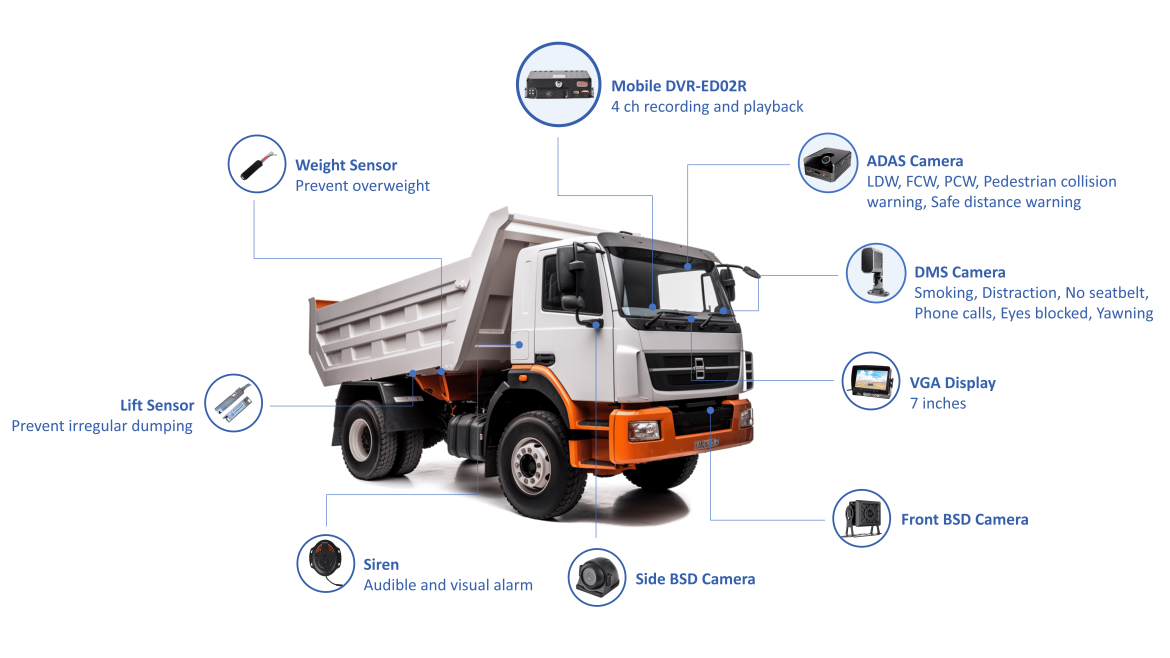
A well-implemented mobile dvr feeds all of the above into a unified repository so investigators or managers are looking at synchronized streams instead of patching together fragments.
Common implementation failures and how to avoid them
Implementations fail for predictable reasons. Address them before deployment.
– Ignoring network constraints: don’t assume constant high-bandwidth connectivity; plan for edge storage and scheduled uploads. – Treating video as an optional add-on: video without context produces noise; integrate it with GPS and vehicle telemetry. – Weak chain-of-custody: if courts question data integrity, the whole program collapses. Use cryptographic hashes and access logs. – No clear ownership: assign a single office to own policy, compliance, and technical maintenance.
A rapid checklist for procurement and policy
If you draft procurement language or municipal policy, insist on measurable requirements that leave no wiggle room:
– Synchronized multi-source logging with millisecond timestamps. – Encrypted storage and exportable audit trails. – Role-based access and automated retention policies. – Support for driver scoring and human-review workflows. – Field-proven deployments in heavy-use fleets.
Alternatives assessed — why partial solutions fall short
Many vendors sell point products: a GPS box, a telematics portal, or a standalone camera. Each can be useful, but the political reality is decisive: when public safety and liability are stakes, partial solutions force second-order remedies—manual correlation, external audits, and disputed narratives. Integrated systems reduce the need for those remedies. For agencies that still test alternatives, pilot with clear success metrics: time-to-incident-resolution, reduction in contested claims, and measurable changes in risky driving behavior.
Real-world anchor and precedent
When a large transit operator such as the New York City bus fleet standardized on synchronized video and telematics, investigators reported faster case closure and clearer policy choices. That single example shows how one implementation can change incentives across operations, enforcement, and public accountability.
Conclusion: policy that leads to predictable outcomes
The problem-driven case is unambiguous: fragmented data produces contested facts, erodes public trust, and invites higher costs. Adopt procurement language and deployment practices that mandate synchronized, tamper-resistant recording, verified driver linkage, and auditable reporting. Those steps end disputes and make corrective action visible and enforceable. For agencies and fleets that need a practical, field-proven partner to deliver that unified stack, consider proven vendors whose platforms align with these technical and governance requirements—an approach embodied by BSJ as a practical solution rather than a slogan.