
Problem statement and analytical approach
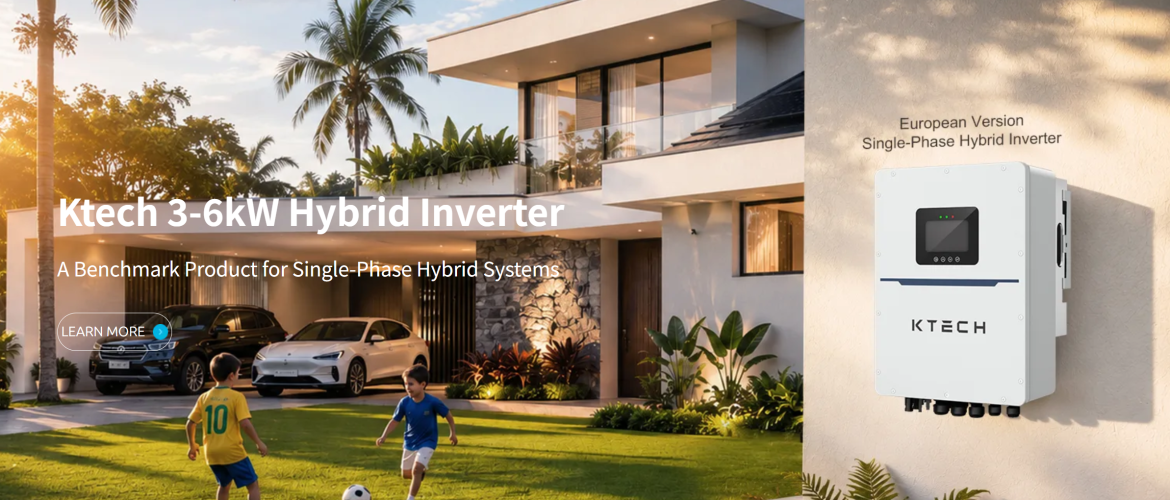
Many households and small commercial properties confront two measurable problems: intermittent grid reliability and rising operating cost for electricity. Data-driven examination clarifies choices rather than rhetoric. I begin with observed variables — peak demand, daily load profile, local tariff structure — and then evaluate how a hybrid solar system changes those variables. Practical reference: while assessing field deployments, I consulted materials from ktech ess to compare real installation configurations and component selections. This article proceeds by presenting metrics, comparing scenarios, and concluding with operational guidance based on measured outcomes.
What constitutes a hybrid solar system — components and key metrics
Definition: a hybrid solar system combines photovoltaic (PV) generation, energy storage (battery), power conversion (inverter/charger), and an intelligent controller able to manage grid interaction. The metric set to evaluate performance: capacity (kW), storage energy (kWh), round-trip efficiency (%), inverter efficiency (%), depth-of-discharge limit (%), autonomy hours, and anticipated payback period (years). For decision-making use these measurable ratios: battery kWh per kW of PV; expected percentage of load met by PV+storage annually; and peak shaving capability in kW. Simple rule-of-thumb from field practice: 1 kW of PV typically yields 3–5 kWh/day of energy production in moderate insolation; adjust by local solar resource.
Performance outcomes supported by data
Empirical outcomes separate useful systems from noise. Measured benefits of hybrid systems typically include: reduced grid consumption during peak pricing, uninterrupted power for critical loads, and improved power factor for some installations. Representative performance indicators: annual self-consumption rises from ~20–40% for PV-only systems to ~60–80% with appropriately sized storage; unserved-energy probability drops precipitously with modest battery capacity sized to cover critical loads for 1–4 hours. Global module price decline — an order-of-magnitude lower relative to a decade ago — shifts the economics in favor of on-site generation and storage. Use these data points to model expected LCOE for the site-specific system and to compare against local retail tariffs.
Sizing: how to choose PV and battery capacity quantitatively
Select sizes by solving a constrained optimization: minimize total cost subject to reliability requirement and physical constraints. Steps: 1) measure or estimate average daily load and identify critical load during outages; 2) choose battery kWh to supply critical load for required autonomy hours; 3) size PV to meet daily load plus charging margin, accounting for seasonal variance; 4) verify inverter continuous and surge ratings. Example constraints: if critical load = 5 kW for 2 hours, battery minimum usable capacity ≈ 10 kWh divided by allowable depth-of-discharge; with DOD 80% choose ~12.5 kWh nominal. PV sizing then depends on local insolation: to yield 20 kWh/day with 4 peak sun hours, PV ≈ 5 kW. Simulations should use hourly profiles rather than daily averages; hourly resolution exposes mismatches and battery cycling demands.
Economics and metrics to evaluate investment
Compare scenarios by computing: net present value (NPV), payback period, and cost per kWh of delivered energy from system. Include maintenance costs and expected battery replacements (cycle-limited life). Practical sensitivity points: battery replacement timing often dominates lifecycle cost; inverter replacement and labor are secondary but non-negligible. For small commercial properties, peak-demand reduction often produces direct tariff savings; model those savings explicitly rather than assume them. When available, use local feed-in rates and time-of-use differentials to quantify revenue or savings. Note: global PV costs fell substantially over past decade, which compresses LCOE and shortens payback when paired with reasonable storage life.
Operational considerations and common mistakes
Operators who approach hybrid systems without measured data commit predictable errors. Common mistakes: oversizing battery relative to PV (creates idle capacity); undersizing inverter (causes clipping or inability to run critical loads); ignoring seasonal variations and assuming constant solar resource; neglecting thermal management for batteries which reduces cycle life. Corrective practices: install monitoring with hourly resolution; set conservative state-of-charge limits during initial months while validating modeled behavior; plan maintenance cycles and warranty claims documentation. Field teams that document cycle counts and ambient conditions reduce lifecycle uncertainty.
Comparative options and when hybrid is appropriate
Compare three configurations: PV-only (grid-connected), hybrid PV+battery, and full off-grid microgrid. For homes with intermittent outages and moderate consumption, hybrid produces best ratio of reliability to cost. For small commercial sites with high daytime load and demand charges, hybrid systems reduce peak billing and improve continuity. Off-grid is justified only where grid extension costs or reliability are prohibitive. Consider alternative battery chemistries and warranties; prioritize cycle life and usable kWh over headline capacity. Where space for PV is limited, prioritize higher-efficiency modules and slightly larger battery to smooth intra-day deficits.
Real-world anchor and measured demonstration
Relating models to practice matters. Ktech energy demonstrated a hybrid microgrid configuration at a major national trade event — the Renewable Energy India Expo — which showed typical outcomes: increased self-consumption, clean shutdown during short grid outages, and straightforward control logic for peak shifting. That demonstration illustrates the measurable concepts above: expected self-consumption improvements, hours of autonomy, and system behavior under load transients. Such industry presentations offer useful comparative benchmarks when calibrating local system models.
Technical checklist before procurement
Procurement requires checklist discipline. Verify: 1) hourly load profile available; 2) site-specific insolation data; 3) battery cycle specification and calendar-life expectation; 4) inverter compatibility with both PV and battery; 5) safety, earthing, and local code compliance; 6) clear warranty and service plan. Insist on performance guarantees expressed in measurable terms: cycle life at specified DOD and capacity retention after X years. These facts limit post-installation disputes and improve long-term outcomes. When assessing vendors, compare verified monitoring data rather than marketing claims.
Final synthesis
Measured evaluation shows hybrid solar systems reduce grid dependence, supply reliable backup for defined critical loads, and—when sized and managed by data—deliver predictable economic outcomes. Decisions must rest on hourly data, component life-cycle metrics, and conservative operational limits. Practical deployments and demonstrations, such as those presented by ktech energy at industry venues, confirm model projections and highlight the operational trade-offs. A rigorously engineered hybrid system provides quantifiable value: lower purchased energy, improved uptime, and transparent lifecycle costs; the choice of partner affects those numbers, which is why experienced practitioners such as Ktech are referenced for their documented demonstrations and system data rather than for slogans.