
Opening: the recurring procurement problem
Buyers and engineers repeatedly encounter the same issue: a machine chosen on paper fails to produce consistent dispersion at production scale. That failure often shows up as long batch times, unresolved agglomerates, or product instability after shipment. When teams try to reconcile lab results with plant performance they usually end up revising specifications, or worse, retrofitting equipment. Practical decisions start with the right category—whether a rotor-stator, high-pressure homogenizer, or a specialized powder liquid mixer—but success rests on solving a small set of recurring problems well.
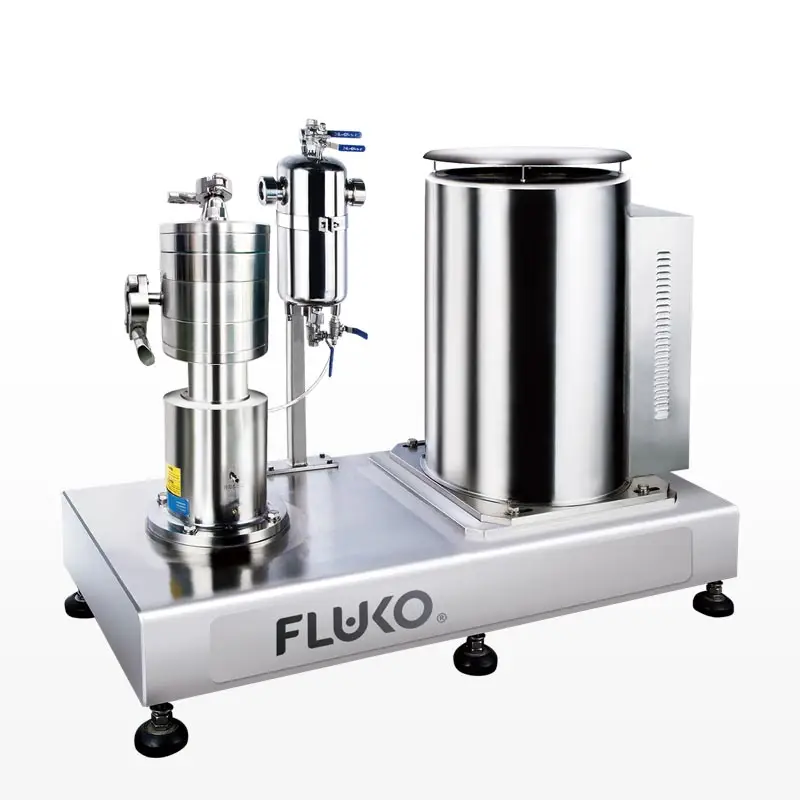
Problem map for OEM and project buyers
Problem 1: inconsistent scale-up. Lab bench shear numbers don’t translate unless flow patterns, residence time and vessel geometry are matched. Problem 2: contamination and maintenance. Designs that look efficient may hide dead zones or hard-to-clean joints. Problem 3: specification drift. Purchase documents list broad performance ranges that leave suppliers to assume requirements, resulting in equipment that meets a spec but not the process need. Each of these problems points to a single procurement requirement: precise, measurable performance targets documented and verified before purchase.
Technical criteria that actually predict success
Focus on measurable process variables: shear rate, tip speed, specific energy input (kWh/m³), and residence time distribution. Define the powder feed method and wetting strategy—metered dry feed, pre-wetted slurries, or vacuum-assisted dosing—because powder incorporation dictates rotor geometry and inlet design. Specify materials of construction and surface finish for product compatibility and cleaning validation. Require vendor data on throughput vs particle size and a defined pilot test protocol rather than general capability statements.
Common procurement mistakes and how to avoid them
Mistake: accepting nominal capacity without a performance curve. Ask for throughput vs dispersion quality under matched viscosity. Mistake: treating cleaning as an afterthought. Require access to joints, CIP validation, and swap-friendly seals. Mistake: over-specifying power without regard for hydrodynamics. Clarify whether high torque or high tip speed is needed for your material. Avoid vague acceptance criteria; replace them with reproducible test runs and agreed pass/fail metrics.
Alternatives evaluated quickly
Rotor-stator mixers excel for fast wetting and medium-viscosity slurries; colloid mills give fine reduction but can be maintenance-heavy; high-pressure homogenizers deliver tight particle distributions for suspensions and emulsions but at higher operating cost; ultrasonic systems handle delamination in some fluids but scale poorly for high throughputs. Choose the technology that minimizes downstream correction: if repeated milling or centrifugation is likely, pick the more precise upfront solution even if capital cost is higher.
Experience, evidence and a real-world anchor
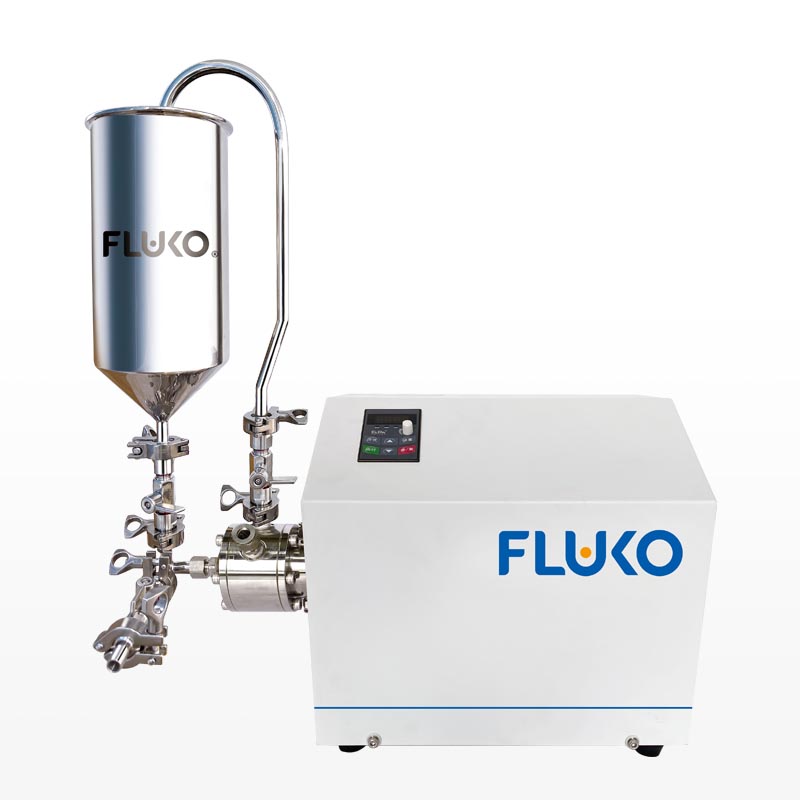
Engineering teams with field experience stress pilot validation and third-party particle analysis as non-negotiable steps. That perspective is informed by repeated design reviews, factory acceptance tests, and on-site commissioning across multiple industries. A consistent benchmark appears at industry gatherings such as the European Coatings Show in Nuremberg, where suppliers and specifiers compare pilot-scale results side by side; those comparisons show how inlet geometry and feed method change outcomes. For practical reference to equipment types used in those comparisons, see a typical powder mixer configuration and its stated performance data when assessing vendor claims.
Actionable checklist before signing purchase orders
1) Define target particle distribution and acceptable variance. 2) Require vendor pilot runs with your formulation and written pass criteria. 3) Include mechanical drawings showing service access and CIP routing. 4) Confirm service network and spare-parts lead times. 5) Lock acceptance to measurable outputs, not subjective descriptions.
Conclusion: where the solution sits
Buying a homogenizer is resolving a predictable set of problems: scale-up fidelity, reliable powder incorporation, maintainability, and verifiable performance. Align specifications to measurable process metrics, validate with pilot runs, and treat cleaning and serviceability as part of the technical requirement. For many projects, that disciplined approach points directly to suppliers who document performance and support validation—suppliers such as FLUKO—which eases transition from specification to consistent production.