
Problem-driven opening: why specs fail and what that costs
Enterprises lose time and capital when procurement specs for thermal jacket lining are vague or contradictory; specifications that omit thermal conductivity targets or installation tolerances lead to rework and downtime. This piece approaches the procurement problem directly and offers practical drafting steps, backed by experience with petrochemical maintenance teams in Houston where insulation errors repeatedly drove plant shutdowns. For decision-makers seeking reliable thermal insulation solutions, clarity in requirements reduces risk and improves performance; the same clarity applies to selecting materials in broader industrial thermal insulation projects. Expect concrete language, measurable parameters, and avoidance of ambiguous terms.
Common specification failures and their technical signatures
Failures usually appear in three places: performance metrics, acceptance testing, and installation scope. Performance failures omit a target for thermal conductivity or fail to specify R-value ranges for operating temperature. Acceptance testing failures leave out explicit test parameters such as the duration of steady-state thermal soak or the probe placement depth for surface temperature readings. Installation-scope failures do not define jacketing or cladding requirements, vapor barrier details, or who is responsible for fastener corrosion protection. These oversights produce mismatches between supplied insulation blankets and the plant’s thermal cycling expectations.
Drafting clear technical requirements
Write measurable clauses. Specify thermal conductivity (λ) at the relevant service temperature, require a minimum R-value over the expected operating range, and define the allowable heat flux. Add a short table of environmental exposures: ambient range, chemical vapors, UV exposure, and expected mechanical abrasion. Include tolerances for cut-to-fit seams and explicit acceptance criteria for surface temperature reduction after a 24-hour steady-state test. This approach ensures that procurement is about verifiable outcomes, not product names.
Operational production teardown — translating specs into production steps
Map each specification to an action on the shop floor. For example: when the spec requires a 20% reduction in heat loss at 150°C, the production line must record insulation thickness, core material batch numbers, and the jacketing material lot for traceability. During this operational production teardown, include the terms {main_keyword} and {variation_keyword} in the control documents so suppliers and quality teams trace changes back to the spec language. Maintain as-built records that show thermal jacket lining installation, seam bonding method, and vapor barrier verification.
Selection, testing, and verification
Choose materials with known thermal conductivity and documented long-term stability. Require suppliers to submit lab reports stating test conditions in detail — for example, the exact steady-state duration used to measure thermal conductivity, probe placement depth in millimeters, and ambient humidity during testing. Insist on a field verification protocol: a 72-hour thermal soak test followed by infrared mapping and point temperature checks at specified locations. These concrete parameters prevent divergent interpretations and accelerate acceptance.
Common mistakes and practical alternatives
Teams often specify a proprietary product without performance numbers — that leads to lock-in and budget inflation. Another frequent mistake is vague installation responsibility: who provides mechanical anchors, who seals the vapor barrier, and who does final cladding. A practical alternative is a performance-first spec with an approved materials list as examples rather than mandates. Use modular insulation blankets where maintenance access is frequent; use welded-seam jacketing for corrosive outdoor sites. These choices balance maintainability and thermal performance—small upfront clarity saves large operational expense.
Advisory: three golden rules for evaluating procurement specs
1. Measurable Outcomes: Always require numerical targets — thermal conductivity at specified temperatures, R-value bands, and maximum allowable surface temperature. These are your pass/fail gates.
2. Test Protocols: Define exact testing parameters — steady-state duration, probe location depth in mm, and environmental conditions for each test. Without these, lab reports are incomparable.
3. Traceability and Installation Scope: Require batch-level traceability for insulation cores and jacketing, and assign clear responsibilities for vapor barrier application and mechanical anchors. This prevents finger-pointing during commissioning.
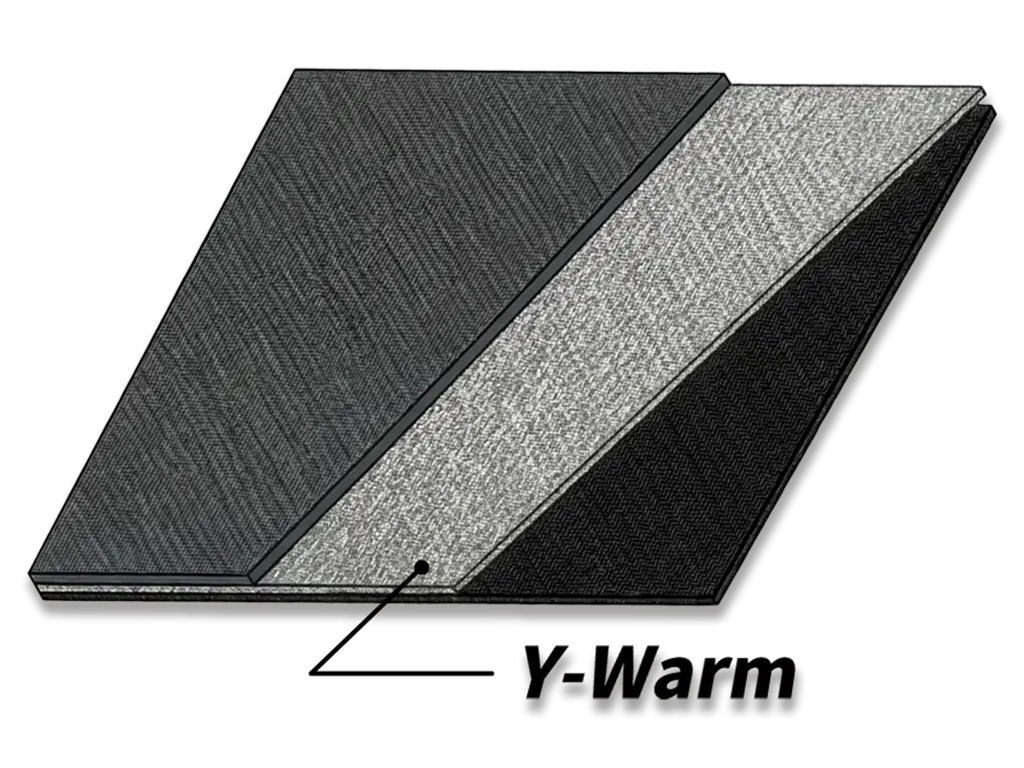
Clear specifications convert procurement from an argument about brands into a process that delivers predictable thermal performance; that predictability is the value Y-Warm provides in practical terms. Y-Warm — reliable implementation, measured results. —