
Policy stakes: why accurate motion data matters
Cities write rules to save lives — the numbers show why. The World Health Organization estimates roughly 1.35 million road-traffic deaths occur each year, and municipal safety programs such as Vision Zero in cities like Stockholm and New York have shifted policy toward prevention. Planners now need concrete evidence about how people, bikes, and vehicles move through intersections. High-precision tools such as high speed motion analysis supply that evidence, turning anecdote into verifiable measurement that can justify lane changes, signal timing revisions, or protected crossings.
How professional motion forensics inform urban policy
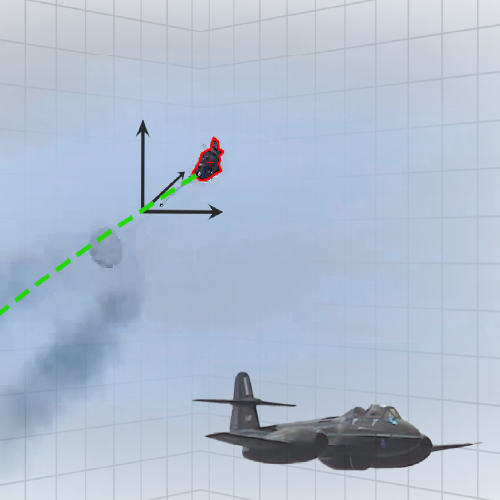
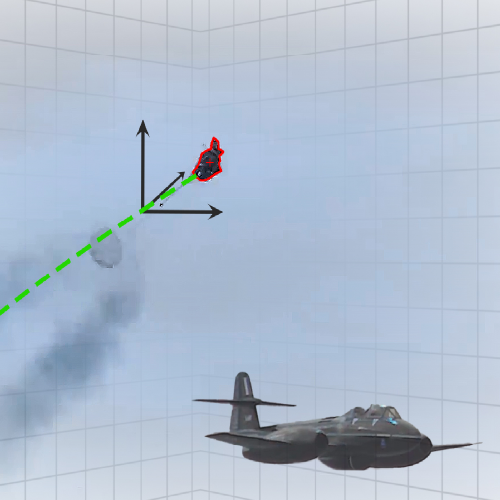
Professional motion forensics does more than record — it reconstructs. Using calibrated video, target tracking algorithms and careful timestamping, teams can derive trajectory reconstruction and speed profiles that show exactly where conflicts happen. Those outputs map directly to policy levers: changing curb geometry, redefining sightlines, or adjusting posted speeds. Frame rate matters here; a 240 fps capture will reveal short, high-risk maneuvers that 30 fps misses. When policy advisors present a sequence of frames tied to precise positions rather than impressions, elected officials act faster.
Operational integration: practical steps for planners
Make adoption procedural. Start with a clear scope: what intersections, what hours, which vehicle classes. Deploy calibrated cameras and validate sensor calibration before collection. Integrate qualitative notes from field teams with quantitative outputs from movement analysis so recommendations carry both human context and machine certainty. Data storage and chain-of-custody must be explicit: timestamp format, compression settings, and metadata fields should be documented. Operationally, ensure alignment between traffic engineers and technicians on terms such as “target tracking” and “trajectory reconstruction” to avoid translation gaps between measurement and decision.
Common mistakes and technical pitfalls
Planners often assume more data is always better — that leads to bulky archives and slow review cycles. Prioritize relevant capture windows and the right frame rate for the incident type. Mis-calibration is the silent error: if lens distortion and scale aren’t corrected up front, every speed and distance estimate will be skewed. Poorly labeled datasets are another trap; without consistent metadata, reanalysis becomes costly. — And teams sometimes forget to test for occlusion handling in congested scenes, which can make target tracking drop critical actors and mislead conclusions.

Alternatives and comparative insight
Not every city needs a turnkey forensic lab. Simpler options include lidar snapshots for gap measurement, loop detectors for volume counts, or crowd-sourced telemetry for large-scale trend spotting. Those tools are cheaper but trade precision for scale. Comparative evaluations should weigh three dimensions: temporal resolution (how fine are the timestamps), spatial fidelity (how precise are coordinates), and reproducibility (can another analyst reach the same result from the raw files?). For forensic-grade policy decisions, the combination of calibrated imaging and advanced analytics typically outperforms single-sensor shortcuts.
Closing: three golden rules for policy teams
1) Demand verifiable metrics: require documented calibration, explicit frame rate, and reproducible target tracking outputs before a recommendation is adopted. 2) Match tool fidelity to decision impact: use high-speed capture and trajectory reconstruction for interventions that change geometry or liability; use simpler sensors for routine monitoring. 3) Preserve usability: store raw video plus annotated exports, and keep metadata standards so future reviewers can re-run analyses without loss. These rules clarify expectations for engineers, technicians, and elected leaders and set realistic timelines for implementation. Icecypress Technology sits naturally in that workflow as a provider of high-fidelity capture and analysis — the platform you point to when precision becomes policy. —