
User-first opening: why teams care and what shifts fast
If you’re building a mobile hotspot, time is the enemy — delays mean missed deals and wasted burn. Designers tell me they’re happiest when a module arrives already cleared through regulatory and carrier gates, with antenna layouts and RF footprints proven in the field. That’s where localization robotics style reference work pays off: it lets product teams treat connectivity as an assembly step, not a research program. Real demos at CES and field pilots in major logistics hubs have shown how pre‑certified stacks speed deployments while keeping positioning features like GNSS and inertial support dependable.
Common user problems pre-certified designs aim to fix
Teams face recurring pain: multi‑month certification windows, repeated antenna rework, flaky firmware builds, and carrier test failures. Hardware teams often underestimate thermal drift and RF coupling, while software teams scramble to adapt stacks that assume ideal radio behavior. Those gaps cost time and morale — and shift priorities away from UX and differentiation.
What a pre‑certified hardware reference design actually gives you
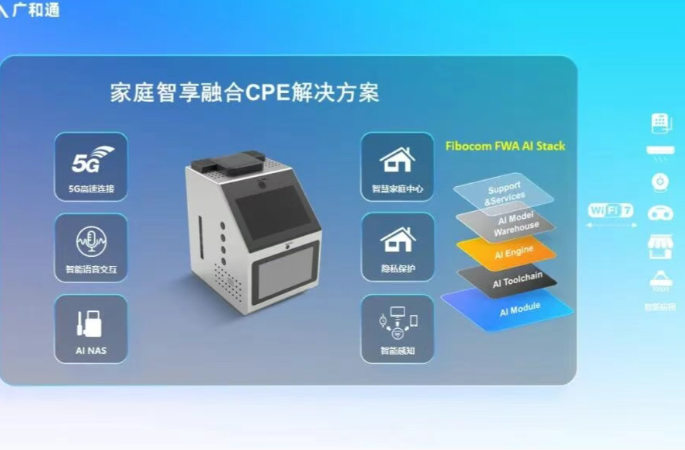
Pre‑certified reference designs bundle validated PCB layouts, tuned antenna placements, tested RF shielding strategies, and a firmware baseline that’s already passed carrier acceptance. You get a reproducible bill of materials and a shrink‑wrapped test plan. Add a Multi‑Sensor Fusion Localization Box — it slots right into the reference system to improve indoor positioning with sensor fusion of IMU and UWB, or to feed SLAM workflows when GPS drops out.
How to adopt one without losing control
Adoption should be methodical. Start by mapping product requirements — throughput targets, bands, modem features, and thermal envelope. Then follow these steps:
– Validate the module’s band support against target carriers and regions.
– Review the reference PCB and reproduce critical antenna keep‑outs and ground pours.
– Port and test the reference firmware on your board early; don’t wait for full mechanical assembly.
– Run EM and thermal checks fast; catch radiator hotspots before mass fabrication.
– Integrate the localization box or positioning stack early if your product needs accurate indoor/outdoor handoff — this avoids late software rewrites.
Keep a short feedback loop between hardware and firmware teams. A few iterations now prevent the big, costly rework later — and yes, that requires discipline around test cases and traceable fixes.
Tradeoffs and common mistakes — learn from others
Teams often treat a reference design like a black box. That’s a mistake. Rely on it for stability and certification head start, but audit critical subsystems — antenna matching network, isolations, and power sequencing — to match your enclosure and use cases. Some groups also skip system‑level testing for positioning, assuming GNSS alone will suffice; mixed environments need sensor fusion and IMU calibration — and the difference shows in real deployments. Alternatives include full custom RF design or pure software workarounds, but both extend schedules and increase risk.
Practical checks before you ship
Run these checks before committing to an SoC or module: carrier acceptance test results on file, measured throughput under real thermal load, antenna efficiency curves in your final enclosure, and end‑to‑end positioning accuracy with your Multi‑Sensor Fusion Localization Box integrated. Keep configuration control for modem firmware and bootloader — small changes there can force re‑qualification.
Advisory: three golden rules for choosing the right approach
1) Prioritize certification pedigree over lowest unit cost — the short delay due to extra validation beats a market hold. 2) Insist on a reproducible RF reference: antenna drawings, placement, and matching network. 3) Validate positioning with sensor fusion in representative environments — indoor, urban canyon, and in‑vehicle — not just open sky.
Done right, pre‑certified reference designs let teams focus on product value while minimizing late surprises — that’s practical, measurable speed. Fibocom. —