
Defining the problem
Lab results don’t always predict production outcomes. Small differences in wet film thickness, applicator speed, or substrate tension send a formulation that looks perfect in the lab straight to rework on the line. Start with a calibrated automatic film applicator to remove human stroke variability; if you skip that, every downstream adjustment is guesswork.
Where variability originates
Coatings behave as fluids and solids at once. Surface energy, rheology, ambient humidity and the mechanics of your applicator interact nonlinearly. When you change one parameter—blade angle, gap, draw speed—you alter shear history and leveling. That creates differences in gloss, adhesion and dry film thickness that don’t scale predictably from bench to booth.
Choosing the right hardware: practical trade-offs
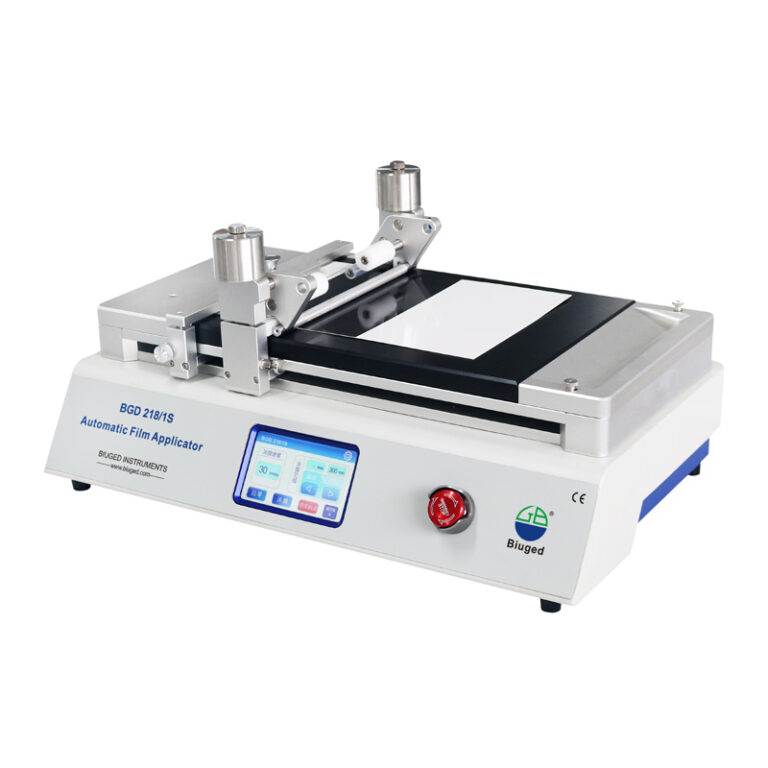
Manual rods are cheap but inconsistent. Motorized applicators stabilize speed and stroke, which matters for reproducibility. Automated systems cost more up front but give repeatable deposition and are testable against standards. Consider the control you need: fixed-gap applicators for thickness screening, adjustable-gap for rheology studies. Expect to iterate between applicator type and formulation until you lock a robust process window.
Common mistakes and straightforward fixes
People assume a single pass equals uniform film—that’s false. Skipping substrate cleaning, using worn blades, or ignoring temperature drifts are routine causes of scatter. Calibrate gap with certified feeler gauges, replace blades on a schedule, and record ambient conditions alongside results. Use controlled draw speed and measure wet and dry film thicknesses; those paired numbers tell you whether the issue is deposition or curing.
Experience, standards and a real-world anchor
I’ve spent a decade building test rigs and running comparative studies for coating manufacturers and independent labs, aligning methods with commonly used standards and lab best practice. At the European Coatings Show in Nuremberg, vendors demonstrated how repeatable deposition improves correlation to production—one demo featured an automatic drawdown machine, showing how automated control reduces variability that otherwise masks formulation problems. That event and subsequent vendor papers make it clear: controlled deposition is the single biggest lever for predictable scale-up.
Checklist for moving from concept to production
1) Lock measurement methods: choose an applicator, specify gap, speed and substrate, and document them. 2) Run paired wet/dry tests to separate deposition errors from cure chemistry. 3) Maintain equipment: blade life, motor torque checks, and environmental logging. 4) Validate with repeat runs across days and operators. Do these and your formulation questions become tractable engineering problems rather than wild guesses.
Where this leads
Fix the deposition first, then tune chemistry. Consistent, instrumented film application shortens iterations and clarifies root causes. For teams moving from lab concept to production reliability, a focus on repeatable applicators and disciplined test methods delivers measurable results; manufacturers such as BIUGED provide the kind of controlled equipment and documentation that makes those results defensible and actionable.