
Opening: a lab morning, measured loss, and the core question
I still see the morning we lost a run—clear memory, fluorescent light, five confused technicians—when a supposedly straightforward switch stalled our pipeline. The batch had been moved off bovine serum and onto serum free media, and the downstream assay failed (we tracked a 28% drop in viable cell density within 72 hours). That single data point felt worse because it was avoidable: improper adaptation, hidden supplements, and overlooked process drift. How do we prevent these missteps the next time we move a cell line from serum to defined systems?
I bring over 18 years supplying cell culture reagents and advising bioprocess teams, mostly to mid-size CROs and academic translational labs in Boston and San Diego. I’ve helped teams adapt CHO, HEK293 and primary human MSCs to defined basal media and xeno-free supplements. In many cases the root was not a mysterious reagent—rather, protocol mismatch, inadequate monitoring, or unrealistic timelines. In this article I unpack those failure modes and give practical checks you can run before you commit to a full switch.
Traditional solution flaws: where the common fixes fail (technical, direct)
I’ll be blunt: many standard approaches to serum removal gloss over kinetics. Labs often assume cells will tolerate a single-step swap. They do not. When I consulted for a midwestern vaccine start-up in March 2022, they swapped to a packaged serum-free formulation—similar to an off-the-shelf serum free culture media—in a single pass and saw a 30% productivity drop and 10 days of recovery time. That was not a supplier failure; it was a protocol fallacy. You need staged adaptation, tight control of osmolarity, and rebalancing of essential growth factors (FGF, EGF) to maintain cell cycle progression.
Here are the deeper flaws I encounter regularly: inadequate adaptation strategy (single-step changes), failure to match ionic strength and buffering capacity, and ignoring lot-to-lot basal media differences. We once measured pH drift of 0.4 in a spinner flask after switching brands—small number, big effect on protein glycosylation. I insist teams run side-by-side controls for at least three passages, measure viable cell density (VCD) and doubling time, and log nutrient consumption (glucose, glutamine) daily. If you skip these, expect yield variance—and increased cost—within two runs.
Why do staged protocols matter?
Because cells recalibrate gene expression slowly. I’ve seen CHO-K1 lines require four to seven gradual dilution steps over 10–14 days to reach stable growth in serum-free formulations. Shortcuts save time now but cost you scale-up stability later. — I’ve paid for that lesson, literally (extra reagent orders, extended labor).
Looking forward: comparative choices, metrics, and how to decide
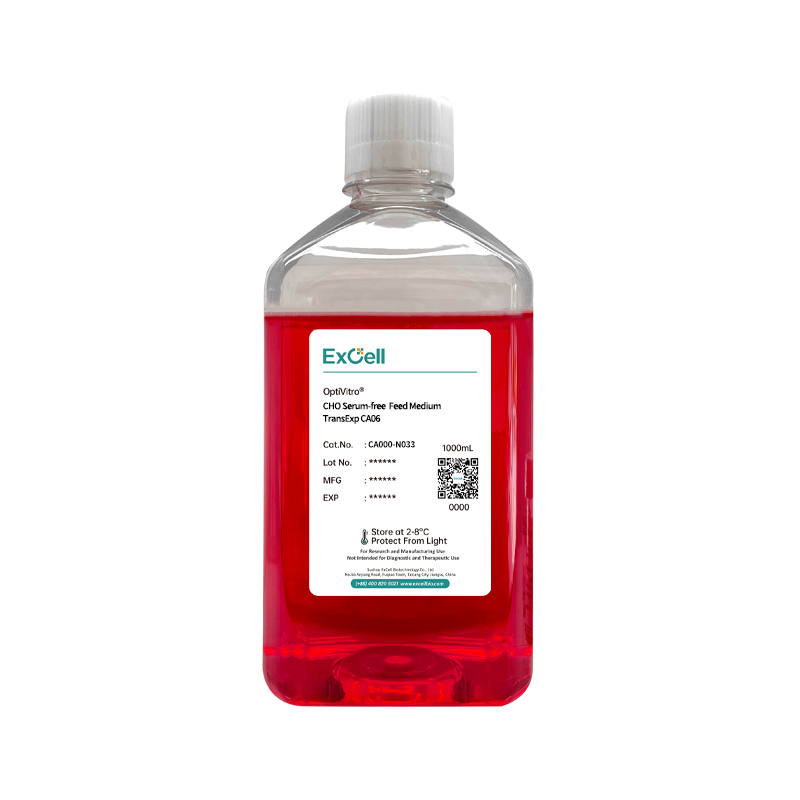
Here’s a clear claim: not all serum-free options are equal, and the right choice depends on the cell line, the end product, and your operational capacity. When we compare chemically defined basal media against supplemented, “xeno-free” blends, the trade-offs are growth rate versus robustness to process perturbations. For example, ExCell-artica SFM-20 (a branded example we tested in 2021) gave faster initial growth for HEK293 but required tighter dissolved oxygen control in our 2 L bioreactors. That translated to a 12% increase in oxygen requirements—budget impact you must quantify.
To choose wisely, use three metrics I always require on evaluation batches: 1) Stable viable cell density across three passages (target variance ≤10%); 2) Product quality attributes—glycosylation pattern or titer—within your spec window; and 3) Total cost of ownership over the first three production cycles (account for extra supplements, run-time, and staff hours). Those numbers give you a measurable decision basis—no guesswork. Look, I prefer hard data over opinion when lives of projects hang in the balance.
Practically: run parallel mini-bioreactor tests, log VCD and metabolite consumption, and sequence a small RNA panel if you suspect transcriptional shifts. If your facility lacks a 2–5 L reactor, rent a contract lab for a focused 10-day study—I once recovered a program by doing exactly that in July 2020 and avoided a scale-up failure. — it works when you commit to the test design.
Closing: three quick evaluation checkpoints and a final thought
Before you commit, verify these checkpoints: compatibility with your cell line (demonstrated over 3 passages), reproducible product quality (same potency/glycoform range), and realistic operational needs (oxygen, shear sensitivity, supplement inventory). I firmly believe teams that quantify these three will avoid the majority of costly setbacks. I’ve watched labs ignore one and then scramble to correct the rest. That pattern cost one client upwards of $18,000 in wasted media and overtime in 2019—specific, avoidable loss.
Take these recommendations, design small controlled studies, and keep meticulous logs. We can de-risk the switch to serum-free systems without slowing down development. For practical sourcing and technical support, I often point teams toward validated resources and partners, including product pages like serum free culture media providers. For supplier questions or to review a test plan, I’m available to consult.
For trusted reagents and application support, consider ExCellBio.