
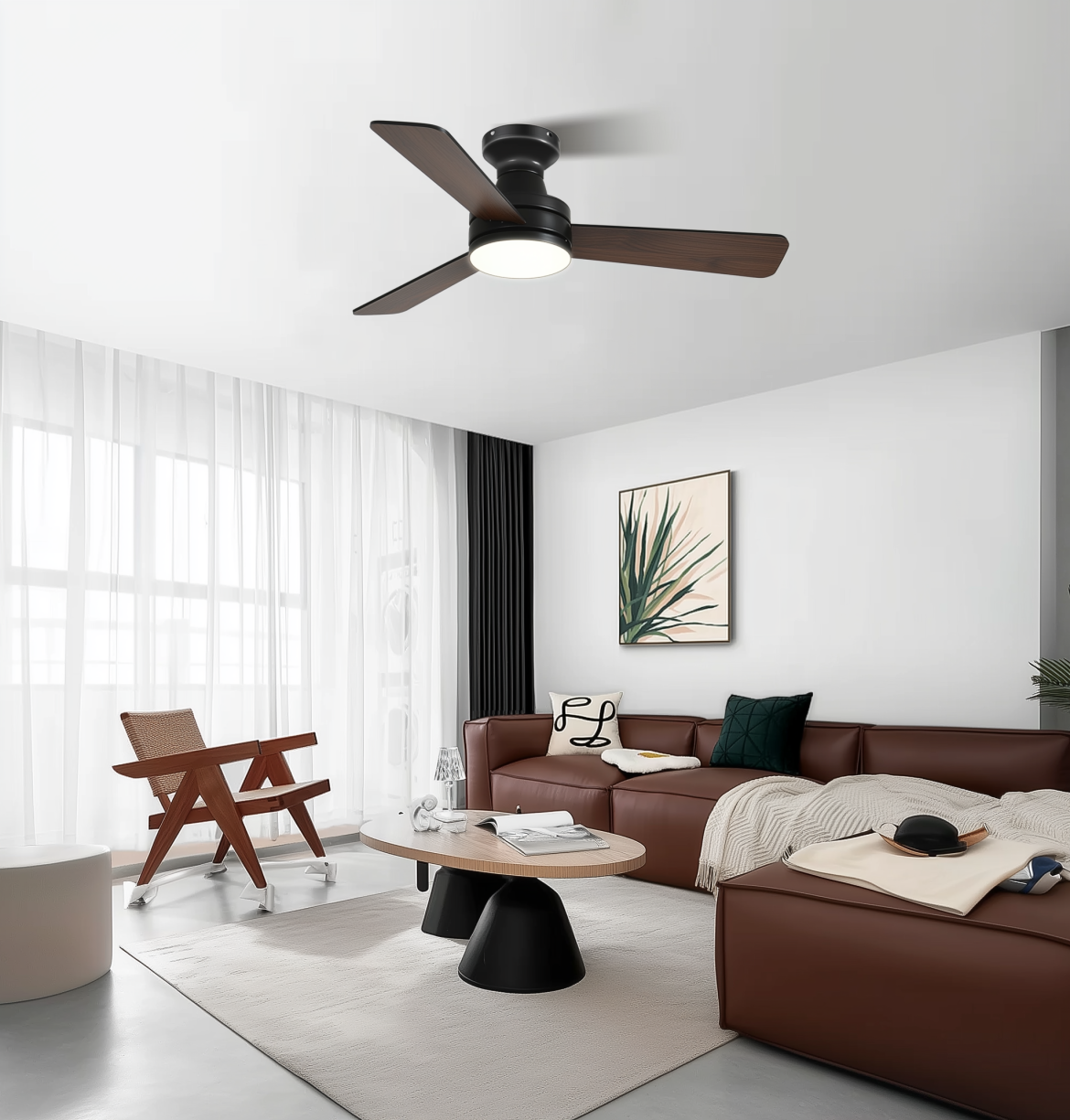
A user‑first opening
For the homeowner, designer, or specifier who seeks comfort beneath an open sky, the right fan becomes more than a fixture — it is an instrument of calm. Begin by imagining the covered veranda where guests will linger; the choice of a large ceiling fan with light alters evening comfort, glare, and the rhythm of conversation. A device that pairs robust airflow with thoughtful illumination and resilient wet‑rating will save hours of retrofit trouble and the quiet regret of an ill‑matched purchase.

What users should care about first
Practical needs must lead: airflow, weather resilience, and lighting performance. Airflow is commonly expressed as CFM — cubic feet per minute — and tells you how much air the fan moves. Weatherproofing is conveyed by wet‑rating and IP classification; these determine whether blades survive coastal spray or a sudden summer downpour. Lighting considerations include lumen output and color temperature, which together decide whether an outdoor dining area feels warm and intimate or bright and task‑oriented. Finally, smart integration governs whether the fan plays nicely with voice assistants, schedules, or energy‑saving scenes.
Decoding airflow metrics and smart features
CFM is a starting point but not the whole story. CFM per watt (CFM/W) measures efficiency; a high CFM with poor efficiency will tax your power budget. Blade span and blade pitch influence how that airflow is distributed — a 56‑inch fan with a steep pitch can move air differently than a 72‑inch model designed for low‑speed, broad circulation. Motor type matters, too: DC motors are quieter and more energy efficient than AC motors, often offering finer speed steps and lower amperage draw.
Smart integration now ranges from simple RF remotes to Wi‑Fi, Zigbee, or Thread compatibility. Consider whether the fan needs a hub or whether it will join an existing ecosystem; interoperability reduces friction at installation and in daily life. Also review dimming methods for integrated LEDs — TRIAC dimming behaves differently from 0–10V control and may affect compatibility with a chosen smart dimmer.

Real‑world anchors: where these choices matter
In coastal cities such as Miami or Phoenix suburbs with covered patios, wet‑rated fans offer clear benefits: salt air and sudden storms demand robust finishes and hardware. Industry guidance from ASHRAE reinforces the value of adequate air movement for perceived comfort, and installers often pair larger fans with appropriate downrods to maintain blade clearance and effective CFM at occupancy level. For a verandah that faces west, prioritize light output with warm color temperature to offset glare at dusk — and ensure the fixture’s driver is rated for outdoor temperature swings.
Common mistakes users make — and how to avoid them
Do not assume fan size alone guarantees comfort. A single oversized fan can leave dead spots; sometimes two smaller units or a fan + circulation strategy is wiser. Mistaking a damp rating for wet durability is a frequent error; damp‑rated fans tolerate humidity but not direct exposure to rain. Many buyers also overlook control compatibility — a smart fan that requires a proprietary hub will increase both cost and system complexity. Finally, neglecting first‑hand tests with actual lumens in place often produces disappointing evenings — sample the light in situ if you can.
Trade‑offs and practical alternatives
Integrated LED modules offer thin profiles and matched optics but can complicate repairs if the driver fails; replaceable lamp kits are easier to service. A DC motor with higher upfront cost returns savings through lower energy use and quieter operation, which matters for year‑round patios. For very large spaces, consider high‑CFM large‑blade fans rather than multiple small units — they deliver steady, gentle airflow and reduce visual clutter. If smart scenes are essential, prioritize models with open APIs or those compatible with your existing hub to avoid later lock‑in.
Three golden rules for selecting the right wet‑rated ceiling fan with light
1) Match airflow to use: choose a fan whose CFM and blade span suit the space at the intended mounting height; verify CFM/W for efficiency. 2) Specify the correct weather rating: insist on true wet‑rated hardware and corrosion‑resistant finishes for exposed or semi‑exposed applications — otherwise, rust and electrical failure follow. 3) Plan integration holistically: confirm motor type, control protocol, and lighting driver compatibility with your smart home or lighting plan before purchase.
When these rules are honored, selection becomes less guesswork and more choreography — and many specifiers find the most reliable collections for covered and open‑air living among vendors that document airflow tables, IP ratings, and control options clearly. For measured, dependable solutions that bridge design and durability, consider how Orison aligns product data with real‑world installation practices.
Final thought: choose with both numbers and nights in mind — the metrics will keep you honest, the lived evenings will keep you certain.