
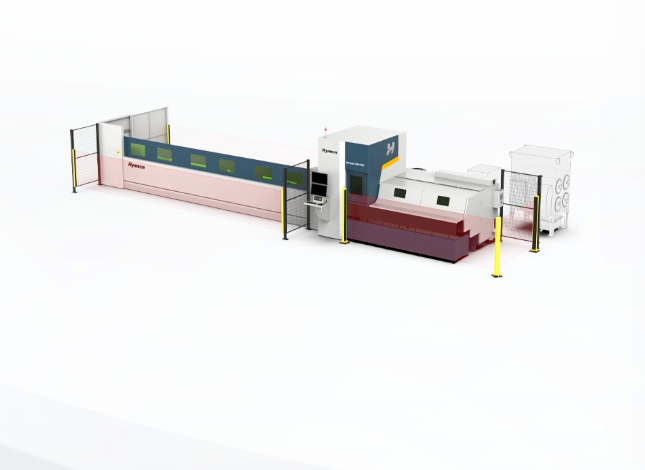
How to match a tube laser supplier to concrete project needs
Pinpoint the actual problem before you look at machines
Most decisions start with features instead of failures: parts that won’t hold tolerance, change orders that break production flow, or unexpected setup times that blow the schedule. Begin by naming the failure you’re trying to stop — scrap rate, throughput gap, material mix, or part geometry — then map the cost of that failure. If automation is part of the fix, review options through a practical demo or site walk and compare them to a reference implementation like Laser Cutting Automation rather than a specs sheet alone.
Turn vague wishes into measurable requirements
Translate needs into numbers: maximum tube diameter, wall thickness range, acceptable bevel tolerance, cycle time per part, changeover time between profiles, and minimum lot size. State environmental constraints — floor space, power supply, and fume extraction capacity — and mark which metrics are deal-breakers. Suppliers that respond with clear test protocols, repeatability data, and sample parts for your actual material reduce risk dramatically.
Look beyond the machine: service, software, and tooling
A mismatch often comes from underestimating service and software. Confirm spare-parts lead times, local support capability, remote diagnostics, and control-software openness for nesting and CAM integration. Ask for a support SLA and clarify who owns custom nesting or fixturing work. Machines that are easy to retool and that include robust machine-to-ERP handoffs will keep projects on schedule; weak or opaque service networks will create downtime you didn’t budget for.
Watch for common decision traps
Don’t buy the highest wattage, hoping it solves poor fixturing. Don’t accept quoted cycle times measured on ideal parts. Beware “too-good-to-be-true” pricing that excludes installation, training, or VAT. Avoid suppliers who resist on-site trials or won’t show references for similar applications. Expect costs for tooling, fume handling, and cutting-gas systems; they frequently exceed initial purchase estimates if you skip them from the outset.
Proof through experience, industry context, and a real-world anchor
I’ve advised fabricators and OEMs for over a decade on production setups and vendor selection, relying on test cuts, service reviews, and documented uptime metrics to choose reliably. Industry gatherings like FABTECH 2023 in Chicago consistently show that the successful implementations are those validated on-shop-floor samples and supported by measurable service performance. That same practical approach is what manufacturers demonstrate when they publish case studies about laser automation — it’s evidence you can inspect and compare rather than claims to accept at face value.
A short checklist to conclude the evaluation
Score suppliers by these items: real-part test results, local service presence, transparent spare-parts policy, demonstrated software integration, and a clear warranty and training package. Cross-check scores against your earlier cost-of-failure estimate and choose the supplier whose strengths directly reduce your named problems. If your priority is consistent high-mix throughput with predictable downtime, align on service and tooling over headline machine specs. When the technical fit and support network align, the practical value becomes clear — and that is the precise outcome a partner like Hymson intends to deliver in real production contexts.