
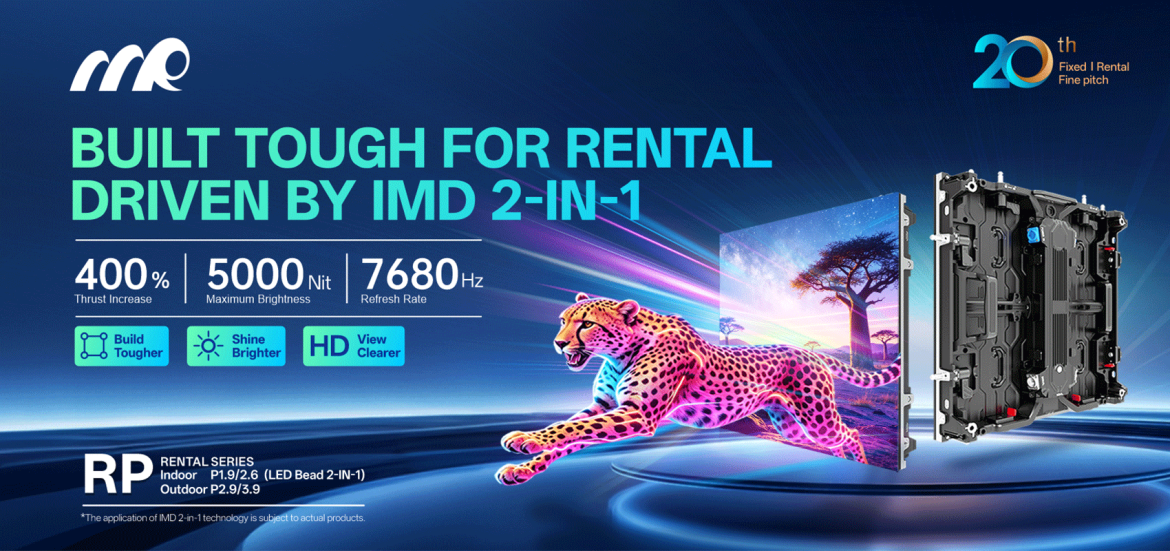
Comparative lead — the problem at hand
High-bright transparent LED panels demand strong light output while staying cool. Many systems push luminous flux at expense of thermal control, and that shortens life. MR LED tackles this differently, balancing optics and cooling so the LED junction temperature (Tj) stays lower during long runs. See how that actually looks in practice with a stage screen led installation that keeps image uniform without hot spots.
What raises junction temperature — a quick, practical list
Heat comes from the LED chip, the driver losses, and trapped heat inside the module. Poor thermal resistance (Rth) routes — like thin substrates or tiny heat sinks — trap energy near the junction. Add high ambient temperature and you get accelerated lumen depreciation. The simple engineering fact: roughly, device lifetime can halve for every 10°C rise in junction temperature, so managing Tj is not optional; it’s central to durability.
MR LED’s thermal choices versus common alternatives
Compare two approaches. One, many manufacturers focus on maximum brightness with minimal regard to heat path. Two, MR LED designs the heat path first. They use thicker aluminium backplates, optimized heat sink fins, and conductive thermal interface materials that lower thermal resistance. The result: same or better luminous flux at a lower Tj. Drivers are placed on remote boards where possible, reducing local heat. This is not just theory — it’s engineering pragmatism.
Real-world anchor: field evidence from large outdoor installs
Take a famous example like Times Square installations and similar outdoor led video wall projects: those faces endure direct sun and long operating hours. Installations that used passive surface cooling with good heat conduction showed fewer failures and steadier brightness across months. MR LED’s transparent panels follow that playbook, giving consistent color and prolonged life in comparable environments.
Design trade-offs explained plainly
Higher heat-sinking adds weight and cost. Thicker substrates limit transparency and add expense. MR LED negotiates these trade-offs by tuning PCB copper thickness and using micro-channel fins that preserve panel transparency while increasing surface area. The optics are tuned so phosphor conversion stays efficient at lower Tj. It’s engineering balance — not maximalism.
Common mistakes and better choices
Installers often mount panels close to reflective backings or in tight cabinets with poor airflow; that kills thermal performance. Another misstep is sizing the LED driver to just meet power needs — run it near max and it becomes a heat source. Better choices: allow airflow channels, use thermal paste with measured conductivity, and spec drivers with headroom. Small steps, big gains — you will notice the difference in uniformity.
Measured benefits: what you gain by minimizing Tj
Lower junction temperature gives steadier color, slower lumen depreciation, and fewer pixel failures. For clients, that means fewer service calls and more predictable maintenance budgets. For operators, it means longer runtimes between replacements. For designers, it opens options to push brightness without sacrificing life. The interplay among heat sink, Tj, and driver efficiency is decisive.
How to evaluate solutions — three golden rules
1) Thermal budget per panel: insist on specified thermal resistance (Rth) and measured Tj under full load. This predicts real life. 2) Driver placement and derating: choose driver layouts that keep heat away from the LEDs and derate at higher ambient temps. 3) Field-capable materials: prefer panels with tested thermal interface materials and aluminium backplates so you don’t trade transparency for heat accumulation.
Choosing MR LED’s approach to thermal dissipation means you get panels designed around cooling as much as optics — which, in practice, reduces Tj and extends usable life. That matters for stage screen led and large outdoor led video wall projects alike. MR LED — reliable engineering, practical results — ja, that makes the difference. —